Should Remote Employees Receive Meal Benefits? A Complete Guide for HR Leaders
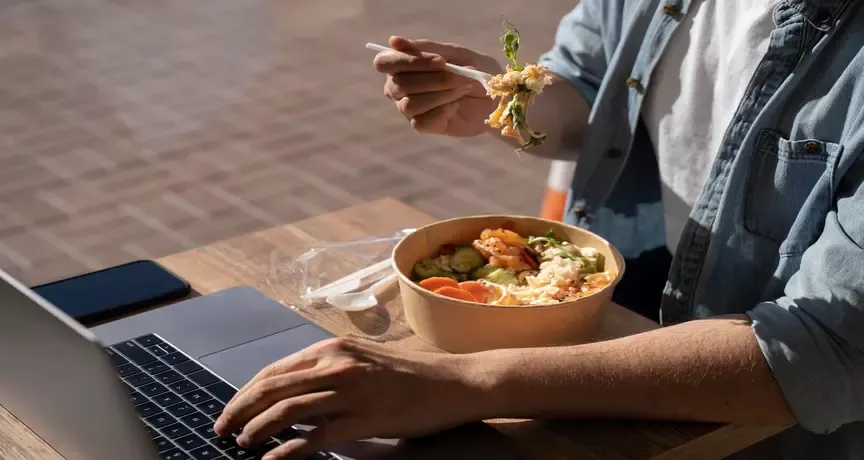
Yes, remote and hybrid employees should receive meal benefits when meals are part of the organisation’s employee value proposition, compensation strategy, or well-being policy. A digital meal card can help HR teams offer fair, flexible, tax-efficient support across locations while improving employee experience, purchasing power, engagement, and retention in distributed teams.
Quick reads
- Meal benefits should support the workday, not the workplace.
- A fair benefits policy treats remote, hybrid, and office employees consistently.
- Digital meal cards offer the flexibility employees want with the control employers need.
- A well-designed meal benefit can improve the everyday employee experience without adding HR complexity.
- As work becomes more flexible, employee benefits need to evolve alongside it.
Remote and hybrid work have changed how employees experience the workday. Lunch is no longer always taken in an office cafeteria or near a corporate park. It may happen at home, between virtual meetings, at a neighbourhood restaurant, or through a food delivery app.
For HR leaders, this raises an important question: Should meal benefits evolve with the workforce? This blog will answer all your doubts. Make sure to read it till the end.
What are remote meal benefits?
Remote meal benefits are employer-provided food or meal support for employees who work from home, hybrid locations, client sites, or distributed offices.
They can take several forms:
|
Option |
How it works |
Best suited for |
Key limitation |
|
Digital meal card |
Employer loads a prepaid meal benefit card for eligible food spending |
Remote, hybrid, and multi-city teams |
Must follow usage and compliance rules |
|
Meal voucher |
The employer provides meal vouchers for eligible food purchases |
Structured employee meal programmes |
Less flexible if not digital-first |
|
Food allowance |
The employer pays a fixed amount as part of the salary or allowance |
Simple policies |
May be less controlled or less tax-efficient |
|
Reimbursement |
An employee pays first, submits bills, and receives reimbursement |
Limited or occasional meal support |
Higher admin and slower employee experience |
|
Cafeteria subsidy |
The employer subsidises on-site meals |
Office-first teams |
Not useful for fully remote employees |
For distributed workforces, a digital meal card is often the most scalable option because it combines flexibility, compliance controls, and ease of use.
HR leaders comparing meal vouchers vs food allowance should evaluate not only cost but also employee experience, compliance, adoption, and administrative effort.
Why remote meal benefits matter now
Meal benefits were once closely linked to the office. Employees come to work, take a lunch break, visit the cafeteria, or use a meal voucher at nearby restaurants.
That model has changed.
According to ACCA's latest workplace report, 53% of professionals in India now work in a hybrid model, up from 45% last year. The report also found that 79% of Indian respondents prefer hybrid work, highlighting the growing need for employee benefits that support people wherever they work.
Today, many employees split time between home and office. Some are fully remote. Others work from satellite locations or travel between cities. Yet the basic need remains the same: employees still need convenient, affordable, healthy meals during working hours.
For HR directors, benefits & rewards managers, CEOs, and finance leaders, this is not only a benefits question. It is a workforce design question. Around 80% of organisations globally allow some form of remote or hybrid work.
A strong remote meal benefit policy can help organisations:
- Support daily purchasing power
- Improve fairness between office, remote, and hybrid employees
- Reinforce wellbeing and healthy eating habits
- Make total rewards more practical and visible
- Increase employee engagement without adding heavy admin
- Offer a digital-first benefit that employees can use every day
In India, digital meal solutions are especially relevant because employees expect convenience, mobile payments, broad merchant access, and clear usage rules. Pluxee supports a fully digital meal benefit on a RuPay prepaid card, usable for food and non-alcoholic beverages at Pluxee-affiliated merchants, with a 3-year validity and employer-defined load amounts.
For organisations comparing options, a digital meal card for employees can offer more control, visibility, and employee value than informal reimbursements or ad hoc food allowances.
|
Did you know? |
Should remote employees receive meal benefits?
Yes, in most modern workplaces, remote employees should receive meal benefits if on-site employees receive them. The reason is simple: employees need meal support because they are working, not only because they are physically present in an office.
A remote employee still has a workday. They still need lunch breaks. They still manage food costs. They still need energy, focus, and well-being support.
Excluding remote workers from meal benefits can create three problems:
|
HR challenge |
What can happen if remote employees are excluded |
|
Equity gap |
Remote employees may feel they receive a weaker benefits package than office employees. |
|
Engagement drop |
Benefits that are not adapted to hybrid work may feel outdated or unfair. |
|
Retention risk |
Employees may compare total rewards with companies offering flexible digital benefits. |
The better approach is to define eligibility by employment status, working hours, role policy, and tax/compliance rules, not only by office attendance.
Here's why extending meal benefits to remote employees makes business sense:
1. Increases purchasing power
Food is a recurring daily expense, and meal benefits provide immediate financial relief. Unlike annual bonuses or long-term incentives, they're experienced almost every workday, making them one of the most visible employee benefits.
For employers, this strengthens the overall compensation package without necessarily increasing fixed salaries.
For HR teams, this makes meal benefits a practical way to strengthen the compensation package without always increasing fixed salary.
2. Supports well-being and productivity
Remote employees often juggle back-to-back virtual meetings, blurred work-life boundaries, and irregular meal schedules. A structured meal benefit encourages employees to take proper breaks, eat regularly, and maintain healthier routines, helping sustain energy and focus throughout the workday.
3. Improves fairness in hybrid teams
Hybrid work can unintentionally create unequal benefits. While office employees may have access to cafeterias or subsidised meals, remote employees often miss out.
Providing a digital meal benefit ensures employees receive comparable support regardless of where they work, helping organisations build a more equitable employee experience.
4. Strengthens employee experience
Employee experience is built through everyday moments. Lunch is one of them.
A meal benefit is simple, visible, and easy to understand. Employees do not need a long explanation to see the value. They can use it during the workday and feel the benefit directly.
That makes it a strong MoFu decision lever for HR leaders: practical enough for Finance, meaningful enough for employees, and simple enough for HR operations.
In 2025, India recorded the highest Talent Health score globally (82/100), with rewards, culture and development emerging as key drivers of employee experience.
5. Help SMEs compete for talent
For SMEs and growing businesses, increasing salaries isn't always feasible. A well-designed meal benefit adds tangible value to the overall rewards package, helping organisations compete for talent while improving retention and employer branding.
Digital meal card vs food allowance for remote employees
Remote teams often ask for flexibility. Finance teams often ask for control. HR teams need both.
Here is how the main options compare:
|
Criteria |
Digital meal card |
Food allowance |
Reimbursement |
|
Employee convenience |
High — easy to use across eligible merchants |
High — paid with salary |
Medium — employee pays first |
|
Employer control |
High — category and merchant restrictions possible |
Low |
Medium |
|
Tax efficiency |
Potentially strong, subject to rules |
Depends on structure |
Depends on policy and proof |
|
Admin effort |
Low to medium |
Low |
High |
|
Usage visibility |
Stronger |
Limited |
Stronger, but manual |
|
Remote suitability |
Strong |
Medium |
Medium |
|
Employee experience |
Smooth and digital |
Simple but less benefit-led |
Slower and paperwork-heavy |
A food allowance is easy to explain, but it may not deliver the same structured value as a meal card. A reimbursement model can work, but it creates friction for employees and HR.
A digital food benefit card is often better for remote and hybrid teams because it supports real usage while keeping the benefit aligned with food and non-alcoholic beverage spending.
For readers who need a foundation, this guide on understanding meal allowances can help clarify how meal allowance structures work.
How meal benefits support hybrid workforces
Hybrid work creates a new challenge: employees do not eat in one fixed place.
A hybrid employee may work:
- Two days from the office
- Three days from home
- Occasionally, from a client site
- Sometimes while travelling
- Sometimes from a coworking space
A meal benefit needs to follow the employee, not the office building.
That is where digital-first benefits help.
HR policy recommendations for remote meal benefits
A remote meal benefit policy should be simple, fair, and easy to administer.
1. Define the purpose
Start with the “why.”
Your policy may aim to:
- Improve purchasing power
- Support healthier meal routines
- Offer parity between remote and office employees
- Increase engagement
- Replace informal food reimbursements
- Strengthen salary structuring
- Improve employee experience
A clear purpose helps HR defend the benefit internally.
2. Define eligibility
Eligibility should be transparent.
Common eligibility models include:
|
Model |
How it works |
Best for |
|
Universal eligibility |
All full-time employees receive the same benefit |
Simple, fairness-led policies |
|
Workday-linked eligibility |
Benefit is calculated by working days |
Cost-controlled policies |
|
Role-based eligibility |
Only specific teams or grades receive it |
Limited rollouts |
|
Location-based eligibility |
Benefit varies by location |
Multi-city cost differences |
|
Hybrid parity model |
Remote and office employees receive equivalent benefit value |
Distributed teams |
For most organisations, a universal or hybrid parity model is easier to communicate and scale.
Example: A SaaS company has 250 employees across India. There is no central office cafeteria.
Policy approach:
- All full-time employees receive a monthly meal benefit
- The benefit is loaded on a digital meal card
- Usage is allowed at eligible food merchants and online food platforms
- The load value is fixed for all employees
- HR includes activation steps in onboarding
Why it works: Simple, equal, and scalable.
3. Define benefit value
The employer decides the load amount.
HR and Finance can decide the value based on:
- Working days per month
- Meal frequency
- Budget
- Tax rules
- Employee level
- Local meal costs
- Existing cafeteria subsidies
- Hybrid attendance patterns
4. Define eligible spends
A strong meal policy should specify that the benefit is for food and non-alcoholic beverages only.
This keeps usage focused and helps employees understand the purpose.
5. Define remote and hybrid usage rules
Your policy should answer practical questions:
- Can employees use the card while working from home?
- Can they use it for food delivery?
- Can they use it at grocery merchants if allowed by company policy?
- Can it be restricted to restaurants only?
- Can the card be used near home and office?
- How are exceptions handled?
Example: A financial services firm has offices in Mumbai, Bengaluru, and Hyderabad. Employees work three days in the office and two days remotely.
Policy approach:
- All employees receive the same monthly benefit
- Office cafeteria access continues
- A digital meal card can be used on remote days
- Policy defines eligible merchants and working-day usage
- HR reviews adoption quarterly
Why it works: It avoids a two-tier benefits experience between office and remote days.
6. Align with tax and payroll
Finance and HR should jointly review:
- Salary structure
- FBP treatment
- Payroll reporting
- Perquisite valuation
- New vs old tax regime implications
- Internal documentation
- Employee communication
This makes policy design even more important. A strong compliance framework helps employers avoid confusion later.
7. Communicate the benefit clearly
Employees should know:
- What is the benefit
- How much is loaded
- Where it can be used
- How to activate it
- Which merchants are eligible
- What is not allowed
- Whom to contact for help
Good communication increases adoption.
A benefit that employees do not understand will not deliver full value.
What are the common concerns HR leaders may have?
Concern 1: “Will remote employees misuse meal benefits?”
This concern is valid, but it is also manageable.
Digital meal cards can restrict usage to specific categories and affiliated merchants. Pluxee India meal benefits are designed for food and non-alcoholic beverage usage at Pluxee-affiliated merchants.
The answer is not to avoid the benefit. The answer is to choose a solution with controls.
Concern 2: “Will this increase our HR admin?”
It should not.
A digital meal benefit reduces manual claims, paper vouchers, and reimbursement follow-ups. HR can manage loads through a structured portal, while employees use the card or app.
Pluxee India positions meal benefits with easy single-portal management and digital-first usage.
Concern 3: “Is this relevant if employees already receive salary?”
Yes.
Salary supports overall income. Meal benefits support a specific daily need. Employees value benefits that make everyday life easier.
A meal benefit also creates a clearer link between employer support and workday wellbeing.
Concern 4: “Should remote employees receive the same amount as office employees?”
In most cases, yes, especially if the organisation wants benefit parity.
However, HR may adjust based on working days, role, location, or existing cafeteria subsidies. The key is to document the logic clearly and apply it consistently.
Concern 5: “What if employees work from smaller cities?”
A broad acceptance network matters.
Pluxee India has 1,50,000+ acceptance points across 1,800+ cities, which helps support teams beyond metro offices.
Implementation checklist for HR teams
Use this checklist before launching remote meal benefits:
- Define the purpose of the meal benefit and align it with your employee rewards strategy.
- Identify eligible employee groups (remote, hybrid, office-based, or role-specific).
- Decide the monthly meal benefit value based on budget, working days, and company policy.
- Review tax implications and payroll treatment with your finance and Tax teams.
- Choose the right benefit model: digital meal card, meal voucher, food allowance, or reimbursement.
- Evaluate and finalise a digital meal benefits provider.
- Establish clear usage rules, including eligible spends, merchants, and policy guidelines.
- Create employee FAQs covering activation, usage, support, and maintenance.
- Launch a clear onboarding and communication plan to ensure employees understand and adopt the benefit.
How to communicate remote meal benefits to employees?
Employee communication should be clear and practical.
Here is a sample structure HR can adapt:
Subject: Your meal benefit now supports your workday, wherever you work
Message:
Your lunch matters, whether you are working from the office, home, or a hybrid location. We are introducing a digital meal benefit to help you manage daily food expenses, enjoy convenient meals, and make your workday smoother.
You can use your meal benefit at eligible food merchants as per company policy. The benefit is designed for food and non-alcoholic beverages only. Your monthly load amount and usage guidelines will be shared by HR.
Key points to include:
- Activation steps
- Eligible spends
- Merchant network details
- Usage restrictions
- Support contact
- Tax disclaimer
- FAQs
This keeps the benefit easy to understand and easy to use.
Where Pluxee fits in the remote meal benefits conversation
Pluxee meal benefits are built for modern workforces that need simple, digital, flexible meal support.
For HR leaders, the value is clear:
- A fully digital meal benefit
- 3-year validity
- 1,50,000+ acceptance points across 1,800+ cities
- 125+ online food-delivery merchants
- Usage for food and non-alcoholic beverages only
- Employer-defined load value
- Configurable controls
- App-linked experience
- 24×7 support
- Compliance-oriented proprietary network
For employees, the value is even simpler: easier meals, better purchasing power, and more freedom during the workday.
For HR, finance, and procurement, a Pluxee meal voucher solution offers a structured way to support employees without creating a manual reimbursement burden.
Final thoughts
The way people work has evolved, and employee benefits need to evolve with it. Whether employees are working from home, the office, or switching between both, meal benefits can help create a more consistent, equitable, and supportive work experience. When designed thoughtfully, they don't just ease everyday expenses; they strengthen employee well-being, improve engagement, and reinforce the value of your overall rewards strategy.
For organisations looking to modernise their employee benefits, we at Pluxee offer meal benefits, a simple digital solution that supports remote, hybrid, and office-based teams alike, making it easier for HR to manage benefits while giving employees the flexibility they value. Our meal network includes 1,50,000+ acceptance points across 1,800+ cities and 125+ online food-delivery merchants, helping employees use the meal benefit at both office and home locations.
FAQs
1. Should remote employees receive meal benefits?
Yes. Remote employees should receive meal benefits when meal support is part of the organisation’s rewards, wellbeing, or compensation strategy. They still have working hours, lunch breaks, food costs, and wellbeing needs. A digital meal card helps employers support remote and office employees more fairly.
2. Are meal benefits applicable for work-from-home employees?
They can be, depending on employer policy and applicable tax rules. HR teams should define eligibility, usage conditions, working-day treatment, and compliance documentation. Finance should validate tax treatment before rollout.
3. Can employers provide digital meal cards to remote employees?
Yes. Employers can provide a digital meal card to remote employees as part of their benefits programme. A digital meal card is especially useful for distributed teams because it can support eligible food spending across multiple locations and merchants.
4. What are the benefits of meal cards for hybrid workforces?
The main meal card benefits for hybrid workforces are flexibility, fairness, convenience, purchasing power support, and easier administration. Employees can use the benefit across eligible food merchants, whether they are working from the office, home, or another approved location.
5. Is a meal card better than a food allowance?
A meal card can be better when employers want more control, stronger usage alignment, a better employee experience, and potential tax efficiency. A food allowance may be simpler, but it is usually less targeted and may not create the same benefit visibility.
6. Can meal benefits support healthier eating habits?
Yes. By making proper meals more affordable and accessible, meal benefits can encourage employees to take lunch breaks, avoid skipping meals, and make better food choices during the workday.
7. Can cafeteria benefits and remote meal benefits coexist?
Yes. Many organisations use both. Office employees may access cafeteria benefits, while remote and hybrid employees receive equivalent support through a digital meal card. Pluxee Café can help digitise workplace dining, while meal cards support distributed usage.
8. What should HR include in a remote meal benefit policy?
HR should include eligibility, monthly value, eligible spends, usage locations, working-day rules, tax considerations, merchant guidelines, claim or card processes, employee support, and review frequency.