Meal Vouchers vs Food Allowance: What’s Better for Employees?

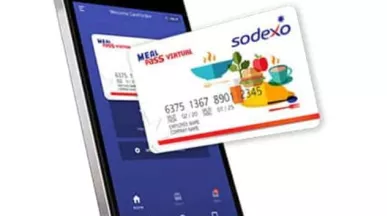
Meal vouchers are coupons provided by the employer to employees, which can be used by employees to purchase meals at specific outlets. On the other hand, a food allowance is a flexible amount added to the pay for any food purchase by employees.
Both have the advantage of decreasing employees' income tax. Meal vouchers are completely exempt from income taxes for employees within specific limits. In contrast, a food allowance provides full employer deductibility. The choice of either depends on the type of employees, tax jurisdictions, and HR needs. The global meal vouchers and employee benefits solutions market was valued at $245.80 billion in 2025 and is projected to grow at a CAGR of 7.47% during the forecast period, i.e., 2032.
Quick reads
- A food allowance provides unmatched flexibility, especially for remote and distributed teams.
- Employee food benefits directly influence productivity, satisfaction, and employer branding outcomes.
- Digital meal vouchers are rapidly replacing paper formats due to compliance, tracking, and audit advantages.
- A hybrid model combining meal vouchers and employee food allowance is emerging as the smartest strategy in 2026.
In 2026, employee benefits aren’t just about insurance policies and annual bonuses anymore. Something as everyday as food is now playing a bigger role in how companies drive productivity, keep employees happy, and improve retention.
With hybrid work becoming the norm, living costs going up in cities, and tax rules constantly evolving, many organisations are taking a closer look at whether meal vouchers or a food allowance works better. As a result, the way an employee food allowance is structured is being rethought to strike the right balance between compliance, flexibility, and what employees actually need. Let’s understand this deeply in the blog.
|
Did you know?
|
What is the difference between meal vouchers and food allowance?
Meal vouchers are a non-cash perquisite provided through digital cards or tokens specifically for food and non-alcoholic beverages, whereas a food allowance is a fixed cash component of the salary. According to the Income Tax Act, 2025, and the Draft Income Tax Rules, 2026, vouchers are exempt from tax up to ₹200 per meal, while cash allowances are generally added to the "Income from Salaries" and taxed at the applicable slab rate.
While an employee food allowance is a monetary benefit, it is provided in the form of a stipend, direct deposit, or salary addition to assist employees in paying for meals during working hours or for business trips. Unlike meal vouchers, a food allowance is intangible and can be used at any location where food is available, including grocery stores and food apps.
Here’s a table to help you understand better:
|
Basis |
Meal Vouchers |
Food Allowance |
|
Form |
Digital/physical prepaid coupon |
Cash stipend or salary component |
|
Flexibility |
Restricted to food vendors |
Can be used anywhere (food-related) |
|
Tax |
Fully exempt up to certain limits |
Exempt only if given in non-cash mode |
|
Best For |
Office-based workforce |
Remote workforce/travelling employees |
As per the Ministry of Statistics and Programme Implementation, 2026, the inflation rate based on the All India Consumer Food Price Index (CFPI) for February 2026 stood at 3.47% (provisional) and the inflation rate for urban areas at 3.48%.
Why are employers switching to digital meal cards?
Employers are transitioning to digital meal vouchers to ensure 100% compliance with RBI Master Directions on Prepaid Payment Instruments (PPIs). These digital solutions ensure that there is an automated audit trail where the allowance can only be spent on food in authorised merchant outlets, and this acts to guard the company against tax litigation during an audit.
Process for implementing a meal benefit programme:
- Salary Restructuring: Introduce a meal perquisite component to the CTC (Cost to Company) structure.
- Vendor Onboarding: Collaborate with an RBI-approved PPI issuer like Pluxee.
- KYC Verification: Make sure that every employee has completed the full KYC of all their digital wallets.
- Monthly Loading: Credit the meal cards with the given amount through a corporate portal.
Example:
Suppose a SaaS company in Pune, India, decided to replace its physical vouchers with fully digital meal cards for more than 500 employees. The average monthly amount loaded onto these cards was ₹8,800 per employee. In just three months, the company saw a 40% decrease in administrative efforts and very few compliance issues during audits.
According to the research of “Employee Benefits: A Bibliometric and Narrative Review”, meal vouchers are one of the most popular employee benefits; they can greatly reduce daily meal costs while boosting job satisfaction. This is because, by providing support for their meals, employees can enjoy healthy eating habits while reducing their financial burdens, thus positively influencing their well-being at work.
Which option drives better employee satisfaction and productivity?
Both meal vouchers and the employee food allowance have a positive effect on the well-being of the employee; however, the difference lies in the approach that each takes. When employees have access to food during the course of their work, it is more than just a luxury; it is a direct correlation with their performance.
Research consistently shows a strong link between food access and productivity. According to a study done at Brigham Young University, employees who have access to food are up to 66% more productive than their counterparts who do not have access to food during their course of work.
The food benefits provide a sense of security for the employee, especially if they are living in a city where the price of a simple meal keeps going up.
Example:
A fintech company in Gurugram added ₹8,800 monthly meal benefits as part of its compensation package for 300 employees. Within one year, the company recorded a 17% improvement in employee retention and a noticeable increase in offer acceptance rates, indicating that food benefits play a strong role in employer branding.
Which option is better for your company?
The "better" option varies depending on three factors, including administrative capacity, tax jurisdiction, and workforce structure. It is not the same for all.
Choose meal vouchers if:
- Your workforce is primarily office-based or urban.
- You want maximum tax efficiency for employees within a structured system.
- You operate in a country with strong meal voucher regulatory frameworks.
- You want to encourage a healthy in-office dining culture and social interaction.
Choose employee food allowance if:
- Your team is remote, distributed, or frequently travelling.
- You need flexibility across geographies and dietary preferences.
- You want a 100% employer tax deduction (where applicable).
- Your workforce includes senior employees with business dining needs.
Example:
A consulting firm in Mumbai implemented a hybrid structure, offering ₹8,800 in meal vouchers and ₹2,500 as a food allowance per month. Over two quarters, the firm observed a 30% increase in office attendance on anchor days and a 20% rise in employee engagement scores, demonstrating that combining structured and flexible benefits delivers stronger workforce outcomes.
|
Did You Know? The meal vouchers and employee benefit solutions market was estimated at USD 97.01 billion in 2025 and is projected to reach USD 145.4 billion in 2034, with a CAGR of 4.6%. |
Compliance checklist for HR managers
To ensure that meal vouchers remain a tax-exempt perquisite and do not attract penalties, HR teams should follow this 2026 compliance framework:
- Limit Verification: Ensure monthly credits do not exceed the per day threshold.
- Non-Transferability: Vouchers must be issued in the name of the employee and be non-transferable.
- Prohibition of Alcohol: Verify that the merchant category codes (MCC) for the cards exclude liquor outlets.
- No Cash Back: Ensure the PPI issuer does not allow cash withdrawals from the meal wallet.
- Documentation: Maintain a record of the number of working days for each employee to justify the exemption amount.
Wrapping up
Both meal vouchers and an employee food allowance are powerful tools, but neither is universally superior. Meal vouchers win on employee-side tax efficiency, vendor discipline, and in-office culture building. A food allowance wins on flexibility, full employer deductibility, and remote workforce applicability.
The smartest HR strategy in 2026 is not an either-or decision. It is a needs-mapped, tax-compliant hybrid that treats food benefits as a strategic investment in workforce productivity, retention, and wellbeing, not just an expense line. For organisations aiming to maximise this impact, Pluxee meal cards serve as the ultimate bridge. By integrating Pluxee, companies can offer the ease of a digital card. With a merchant network spanning over 1,00,000+ points across 1,800 Indian cities, Pluxee ensures that whether your team is grabbing a quick lunch in cafes or ordering online, their "food money" goes further.
FAQs
1. What are the benefits of a meal voucher?
Meal vouchers provide a significant boost to an employee's take-home pay by reducing their total taxable income through high-value exemptions. They promote healthier eating habits by ensuring funds are dedicated strictly to nutritious food and non-alcoholic beverages during work. For employers, these vouchers simplify the administration of benefits and ensure total compliance with regional tax laws and digital payment regulations.
2. What is the purpose of a meal allowance?
A meal allowance is designed to cover the additional costs an employee incurs for sustenance while performing their professional duties. It acts as a financial cushion against rising food inflation, ensuring that employees can afford quality meals without depleting their base savings. This stipend helps maintain high energy levels and cognitive focus throughout the workday, directly influencing overall corporate productivity.
3. Where can I use my Pluxee Meal Card online?
Your meal card is integrated with India's largest food-tech network. You can use it as a payment method on Swiggy and Zomato by entering your card details in the section of those apps. Ensure you are only ordering food or non-alcoholic beverages to avoid transaction declines.