What Is a Virtual Interview? Meaning, Benefits, Process and Best Practices
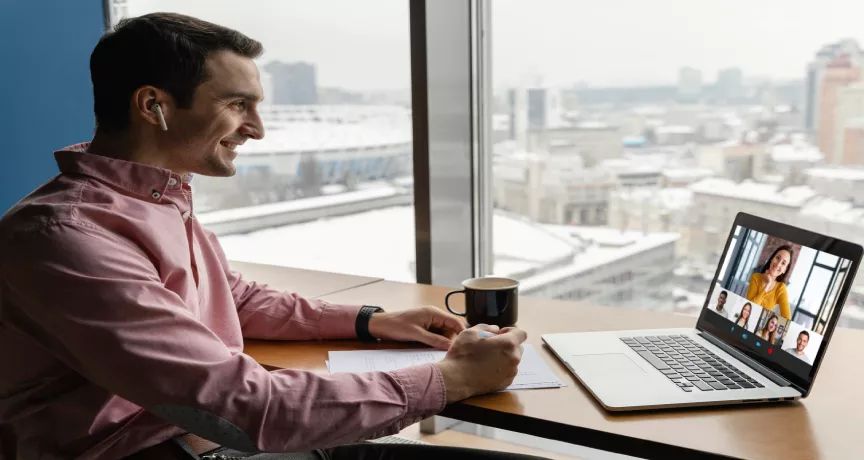
Hiring no longer needs everyone to be in the same room. With remote and hybrid work becoming part of modern working life, employers can meet, assess and shortlist candidates from almost anywhere through virtual interviews.
A virtual interview uses video conferencing or an online interviewing platform to connect recruiters, hiring managers and candidates remotely. It can make recruitment more flexible, remove unnecessary travel and help organisations reach talent beyond their immediate location.
But technology alone does not create a great interview. The experience still needs to feel organised, fair and human.
In this guide, I’ll explain what a virtual interview is, how it works, its benefits, the tools involved and the best practices employers and candidates can follow.
Key Takeaways & Figures
- Virtual interview meaning: A virtual interview is a job interview conducted remotely using video conferencing or an online interview platform.
- 2 common formats: Live virtual interviews and pre-recorded or asynchronous interviews.
- 5 typical stages: Scheduling → technology check → online interview → candidate evaluation → follow-up.
- 3 common tools: Microsoft Teams, Google Meet and Zoom are widely used for online meetings and virtual interviews.
- Employer benefits: Virtual interviews can simplify scheduling, reduce travel requirements and expand access to candidates across locations.
- Candidate benefits: Candidates can interview remotely, avoid unnecessary travel and explore opportunities outside their immediate location.
- Basic requirements: A reliable internet connection, compatible device, working camera and microphone, suitable environment and access to the selected platform.
- Good practice: Effective virtual interviewing combines reliable technology with structured evaluation, clear communication and a positive candidate experience.
What Is a Virtual Interview?
A virtual interview is a job interview conducted remotely using video conferencing or an online interview platform instead of meeting face-to-face at a physical location. Recruiters and hiring managers can speak with, assess and shortlist candidates through tools such as Microsoft Teams, Google Meet or Zoom.
Virtual interviews can support different stages of recruitment, from an initial screening conversation to interviews with hiring managers or multiple stakeholders.
For employers, the format can make it easier to connect with candidates across locations while reducing the need to coordinate travel or physical meeting spaces. For candidates, it provides the flexibility to attend an interview from a suitable location with an internet-connected device.
Virtual Interview Meaning
In simple terms, virtual interview means an interview that takes place online rather than at an employer's office or another physical location.
The interviewer and candidate typically need:
- A laptop, desktop, tablet or smartphone
- A stable internet connection
- A camera and microphone
- A video conferencing or interview platform
- A private, distraction-free environment
Virtual interviews generally fall into two formats:
- Live virtual interview: The candidate and interviewer meet online in real time and have a two-way conversation.
- Pre-recorded or asynchronous interview: The employer provides questions in advance or through an interviewing platform, and the candidate records responses for the recruitment team to review later.
The right format depends on the hiring stage and the experience an organisation wants to create. A live conversation can support deeper interaction, while an asynchronous format can provide additional scheduling flexibility during early-stage screening.
Virtual Interview vs In-Person Interview
The biggest difference is where and how the interaction takes place. An in-person interview requires the candidate and interviewer to meet physically, while a virtual interview uses digital technology to connect them remotely.
|
Factor |
Virtual Interview |
In-Person Interview |
|
Location |
Conducted remotely |
Conducted at a physical location |
|
Travel |
Usually not required |
May be required |
|
Technology |
Internet, camera, microphone and online platform required |
Limited technology may be needed |
|
Scheduling |
Can be easier across different locations |
Requires physical availability |
|
Candidate reach |
Can connect employers with candidates across locations |
Often more dependent on location |
|
Interaction |
Digital, live or pre-recorded |
Face-to-face and typically live |
Neither format automatically creates a better interview.
The quality of the experience depends on how well the interview is designed and conducted. Clear communication, relevant questions, consistent evaluation and respect for the candidate's time matter whether the conversation happens online or face-to-face.
How Does a Virtual Interview Work?
A virtual interview typically follows five steps: scheduling, technical preparation, joining the online interview, candidate assessment and follow-up. The conversation may happen live through a video platform or asynchronously through recorded responses, depending on the employer's recruitment process.
Here is how the process usually works.
1. Schedule the Virtual Interview
The recruiter selects a suitable date and time with the candidate and sends an interview invitation.
The invitation should clearly include:
- Date and time
- Video meeting or interview platform
- Joining link and instructions
- Expected interview duration
- Names or roles of interviewers, where appropriate
- Any documents, presentations or assessments the candidate needs to prepare
- A contact person in case of technical difficulties
Clear instructions help candidates prepare confidently and reduce avoidable confusion before the conversation begins.
2. Check the Technology and Interview Environment
Before the interview, both the interviewer and candidate should test their internet connection, camera, microphone and chosen platform.
It also helps to check:
- Device battery or power supply
- Audio and video settings
- Platform permissions
- Internet stability
- Lighting and camera position
- Background and potential distractions
Recruiters can also provide a backup option, such as a phone number or alternative meeting link, in case technology fails.
3. Join and Conduct the Interview
For a live virtual interview, the recruiter and candidate join the scheduled online meeting and interact in real time.
The interview can include introductions, questions about the candidate's experience, role-specific questions and time for the candidate to ask questions about the organisation and position.
Depending on the role, employers may also use screen sharing, presentations, skills assessments or practical exercises during the conversation.
A structured approach helps recruiters assess candidates consistently instead of allowing the technology or format to shape the quality of the evaluation.
4. Evaluate the Candidate
After the interview, recruiters and hiring managers review the candidate against the criteria defined for the role.
A structured evaluation may consider:
- Relevant skills and experience
- Role-specific knowledge
- Responses to competency-based questions
- Results of assessments or practical tasks
- Communication relevant to the position
- Evidence against predefined hiring criteria
I recommend using a consistent interview structure and evaluation criteria for candidates applying for the same role. This keeps the focus on job-relevant evidence rather than the virtual setting itself.
For example, temporary internet problems or unfamiliarity with a particular video platform should not automatically become a measure of someone's ability to perform a role unless those capabilities are genuinely relevant to the job.
5. Follow Up With the Candidate
The virtual meeting may end online, but the candidate experience does not.
Recruiters should communicate what happens next, including expected timelines, additional interview rounds or assessments where applicable.
Timely follow-up can include:
- Acknowledging completion of the interview
- Sharing the next stage of the recruitment process
- Requesting additional information when required
- Scheduling another interview
- Communicating the hiring decision
A simple principle helps here: do not let digital convenience create human distance. Candidates should know where they stand and what they can expect next.
Live vs Pre-Recorded Virtual Interviews
Not every virtual interview happens in real time. Employers can choose between live and pre-recorded virtual interviews depending on the hiring stage.
|
Interview type |
How it works |
Best suited for |
|
Live virtual interview |
Candidate and interviewer speak online in real time |
Detailed conversations, hiring-manager interviews and later recruitment stages |
|
Pre-recorded virtual interview |
Candidate records responses that recruiters review later |
Early-stage screening and situations where coordinating schedules is difficult |
Live interviews give both sides an opportunity to ask follow-up questions immediately. Pre-recorded interviews provide more scheduling flexibility but offer less real-time interaction.
For HR teams, the question should not simply be, “Which format is faster?” It should also be, “Which format creates the right candidate experience for this stage of hiring?”
What Are the Benefits of Virtual Interviews?
Virtual interviews can make recruitment more flexible, accessible and efficient by allowing employers and candidates to connect without being in the same physical location. They can reduce travel requirements, simplify scheduling and help organisations consider candidates across a wider geographic area.
The benefits, however, go beyond convenience. When designed well, virtual interviews can support both recruitment efficiency and a positive candidate experience.
Benefits of Virtual Interviews for Employers
For HR teams, recruiters and hiring managers, virtual interviews can remove several practical barriers from the recruitment process.
Key benefits include:
- Access to a wider talent pool: Employers can accessa wider talent pool by interview candidates who live in different cities or regions without requiring them to travel for every recruitment stage.
- Reduced travel and logistical requirements: Recruiters may need less physical meeting space, while candidates can avoid travelling to an office for an initial conversation.
- Greater scheduling flexibility: Online meetings can make it easier to coordinate interviews between candidates, recruiters and hiring managers working from different locations.
- Support for remote and distributed hiring: Organisations recruiting for remote or geographically distributed teams can manage interviews without bringing every candidate to one location.
- Faster coordination between hiring stakeholders: Relevant interviewers can join an online conversation without everyone needing to be physically present.
- More consistent interview processes: HR teams can use structured questions, defined stages and common evaluation criteria across virtual interviews.
Virtual interviews can be particularly useful during initial screening and early recruitment stages, when employers may need to speak with several candidates before deciding who should progress.
Benefits of Virtual Interviews for Candidates
Candidates can benefit from the same flexibility.
A virtual interview can provide:
- Less travel: Candidates can attend from a suitable location instead of travelling to the employer's workplace.
- Greater geographic access: Candidates can explore suitable opportunities beyond their immediate city or region.
- More scheduling flexibility: Removing travel time can make interviews easier to fit around existing commitments.
- Lower interview-related expenses: Candidates may avoid costs associated with local transport or longer-distance travel.
- A familiar environment: Some candidates may feel more comfortable interviewing from a quiet, prepared space of their choice.
These benefits can make recruitment easier to access, but employers should not assume every candidate has the same technology, internet quality or private space available.
Offering clear instructions and reasonable alternatives when technical problems occur can help create a more inclusive experience.
Can Virtual Interviews Reduce Time to Hire?
Virtual interviews can help reduce scheduling and logistical delays, but they do not automatically guarantee a shorter time to hire.
For example, an employer may be able to schedule an online first-round interview sooner because neither the candidate nor interviewer needs to arrange travel or meeting-room availability.
Actual time to hire still depends on:
- Number of interview rounds
- Availability of decision-makers
- Speed of candidate evaluation
- Assessment requirements
- Internal approval processes
- Communication between recruitment stages
I recommend viewing virtual interviews as one way to remove friction from hiring, rather than as a shortcut to better recruitment.
The strongest virtual hiring processes combine efficiency with structure, fairness and clear candidate communication.
Virtual Interview vs Face-to-Face Interview: What Is the Difference?
A virtual interview takes place remotely through an online platform, while a face-to-face interview requires the candidate and interviewer to meet at a physical location. Virtual interviews offer greater location and scheduling flexibility, while in-person interviews provide direct, physical interaction.
Both formats can support effective hiring. The right choice depends on the role, recruitment stage and experience you want to create.
Virtual Interview vs In-Person Interview at a Glance
|
Factor |
Virtual Interview |
Face-to-Face Interview |
|
Interview location |
Conducted remotely |
Conducted at an office or another physical location |
|
Travel requirement |
Usually no travel required |
Candidate or interviewer may need to travel |
|
Technology |
Requires a suitable device, internet connection, camera, microphone and platform |
Usually less dependent on video-conferencing technology |
|
Scheduling |
Easier to coordinate across different locations |
Requires physical availability at the same location |
|
Geographic reach |
Makes it easier to interview candidates across locations |
Can involve additional logistics for distant candidates |
|
Interaction |
Live online or pre-recorded |
Live and in person |
|
Office exposure |
Limited unless a virtual tour or similar experience is provided |
Candidate can experience the physical workplace directly |
|
Technical disruption |
Internet, audio or video issues can affect the conversation |
Less exposed to online connectivity problems |
|
Best use cases |
Screening, remote hiring and geographically distributed recruitment |
Workplace visits, selected later-stage interviews and roles where on-site interaction is useful |
When Should Employers Use a Virtual Interview?
A virtual interview can work particularly well when speed, accessibility or geographic flexibility matters.
Employers may choose it when:
- Conducting initial candidate screening
- Hiring candidates across different cities or locations
- Recruiting for remote or hybrid positions
- Coordinating interview panels based in different locations
- Reducing unnecessary candidate travel during early recruitment stages
- Speaking with a larger pool of shortlisted candidates
For example, an HR team hiring across multiple Indian cities could conduct the first interview virtually before inviting selected candidates to an office where an in-person stage genuinely adds value.
When Can a Face-to-Face Interview Add Value?
An in-person interview can be useful when the physical workplace or an on-site activity is relevant to the hiring decision or candidate experience.
This could include situations where:
- Candidates need to understand the workplace environment
- The role requires an on-site practical assessment
- Employers want shortlisted candidates to meet a wider team in person
- A physical facility is directly relevant to the role
- A later recruitment stage would benefit from deeper on-site interaction
That does not mean every final interview needs to happen in person. Employers should consider whether requiring travel genuinely adds value before adding it to the recruitment process.
Can Employers Combine Virtual and In-Person Interviews?
Yes. Employers can use a hybrid interview process that combines virtual and face-to-face stages.
For example:
- Initial screening: A short virtual conversation with the recruiter
- Hiring-manager interview: A detailed live virtual interview
- Final stage: An in-person meeting or workplace visit when relevant to the role
In my experience, the strongest approach is not to ask whether virtual or face-to-face interviewing is better. Ask which format gives both the employer and candidate what they need at that particular stage.
Every interview stage should earn its place. If a virtual conversation can achieve the same objective without unnecessary travel or coordination, it may be the more practical choice. If being on-site provides meaningful information that cannot be gained remotely, an in-person meeting can add value.
What Tools and Features Are Used for Virtual Interviews?
Virtual interviews typically use video conferencing or dedicated recruitment platforms that allow employers and candidates to communicate remotely. Common options include Microsoft Teams, Google Meet and Zoom, alongside specialised recruitment and assessment platforms.
The best tool is not necessarily the one with the longest feature list. HR teams should choose technology that makes the interview simple for candidates and practical for interviewers.
Common Virtual Interview Platforms
|
Platform |
Typical Virtual Interview Use |
|
Microsoft Teams |
Live video interviews, calendar-based meetings, screen sharing and panel interviews |
|
Google Meet |
Browser-based video interviews, scheduled meetings and screen sharing |
|
Zoom |
Live video interviews, scheduled meetings, screen sharing and multi-participant interviews |
|
Recruitment platforms |
Interview scheduling, candidate workflows, assessments and structured evaluation, depending on the platform |
Candidates should receive the joining link and instructions before the interview, particularly when they need to install software, create an account or complete an assessment.
Useful Features for Virtual Interviews
Depending on the platform and recruitment process, useful capabilities can include:
- Video and audio communication
- Screen sharing
- Calendar integration and scheduling
- Waiting rooms or controlled meeting access
- Chat and file sharing
- Interview scorecards
- Skills or role-specific assessments
- Interview recording, where appropriate and permitted
- Candidate communication and follow-up tools
Not every organisation needs every feature.
For example, a recruiter conducting a short screening conversation may need little more than reliable video and audio. A technical interview could require screen sharing, coding exercises or another role-specific assessment.
Should Employers Record Virtual Interviews?
Employers should not assume that a virtual interview should be recorded simply because the technology makes recording possible.
Before recording an interview, organisations should consider their internal policies, the purpose of the recording, candidate communication, consent requirements, access controls, retention practices and applicable privacy or data-protection obligations.
If recording is unnecessary for the recruitment decision, keeping the process simpler may also reduce the amount of candidate data an organisation needs to manage.
The principle is straightforward: use technology because it improves the interview, not simply because the feature exists.
How to Conduct a Successful Virtual Interview
A successful virtual interview requires preparation, reliable technology, structured questions and clear communication. Employers should create a consistent experience for candidates, while candidates should prepare their technology and environment just as carefully as they prepare their answers.
Virtual Interview Best Practices for Employers
For recruiters and hiring managers, preparation starts before the video call.
- Send clear instructions in advance. Share the time, platform, joining link, expected duration and interview format.
- Test the technology. Check your internet connection, microphone, camera and platform access.
- Explain the interview structure. Tell candidates what to expect, particularly if the process includes a presentation, assessment or panel.
- Use structured questions. Ask candidates for the same role a consistent set of job-relevant questions where appropriate.
- Define evaluation criteria. Decide what skills, experience and evidence interviewers should assess.
- Prepare for technical problems. Have a backup communication option if connectivity fails.
- Minimise distractions. Conduct the conversation from a quiet environment and give the candidate your attention.
- Leave time for candidate questions. Give candidates an opportunity to understand the role, team and organisation.
- Communicate the next step. Explain what happens after the interview and when the candidate can expect an update.
A virtual format should never become an excuse for a rushed or impersonal interaction.
Virtual Interview Tips for Candidates
Before the interview, candidates should:
- Test the camera, microphone and internet connection
- Check that the interview platform works
- Charge the device or connect it to power
- Choose a quiet, well-lit environment
- Keep their CV and relevant information accessible
- Join a few minutes before the scheduled time
- Close unnecessary applications and notifications
During the interview, look towards the camera when appropriate, listen carefully and answer questions clearly.
Professionalism still matters online. Choose suitable clothing, avoid unnecessary distractions and treat the conversation with the same preparation you would give an in-person interview.
Common Virtual Interview Mistakes to Avoid
For employers, common mistakes include:
- Sending unclear joining instructions
- Joining late without communicating
- Conducting an unstructured interview
- Allowing notifications or other work to interrupt the conversation
- Treating minor technical problems as candidate-performance issues
- Ending without explaining the next stage
Candidates should avoid joining without testing their setup, interviewing in a highly distracting environment where alternatives are available, reading scripted answers throughout the conversation or ignoring basic platform etiquette.
Technical difficulties can happen to anyone. What matters is how both sides respond to them.
Expert Insight: Make Virtual Hiring Human, Not Just Digital
In my experience, the best virtual interviews do not feel like technology-led interviews. The platform should almost disappear into the background so the recruiter and candidate can focus on the conversation.
That requires more than choosing a reliable video tool.
I recommend designing every virtual interview around three questions:
- Does the candidate know what to expect?
- Are we assessing evidence that genuinely matters for the role?
- Does the candidate leave the conversation understanding what happens next?
These questions keep the process focused on people rather than platforms.
A candidate's experience during recruitment can shape their early perception of an organisation. A confusing invitation, distracted interviewer or prolonged silence after an interview can undermine an otherwise efficient digital process.
By contrast, clear communication, preparation and respectful follow-up can make virtual hiring feel personal even when people are separated by hundreds of kilometres.
Technology can remove distance. HR teams still create the connection.
Conclusion: Make Every Virtual Interview a Better Candidate Experience
Virtual interviews have changed where recruitment conversations can happen, but the fundamentals of a good interview remain the same.
Employers still need clear communication, relevant questions, fair evaluation and respectful follow-up. Candidates still need preparation, professionalism and an opportunity to understand the role.
The advantage of virtual interviewing is flexibility. HR teams can connect with talent across locations, reduce unnecessary travel and create recruitment processes that work across remote, hybrid and office-based environments.
But digital efficiency should never come at the expense of human connection.
When you combine the right technology with a structured and candidate-focused process, a virtual interview becomes more than an online meeting. It becomes an opportunity to create a positive first experience of your organisation.
For HR teams reviewing their recruitment experience, the next step can be simple: examine each interview stage and identify where better communication, greater flexibility or a more people-focused approach could remove friction for candidates.
Frequently Asked Questions
1. What is the meaning of a virtual interview?
A virtual interview is a job interview conducted remotely using video conferencing or an online interviewing platform. The interviewer and candidate communicate without needing to meet at the same physical location.
2. Is a virtual interview the same as a video interview?
The terms are often used interchangeably when referring to a live interview conducted over video. However, virtual interviewing can also include pre-recorded or asynchronous interviews, where candidates record answers that recruiters review later.
3. How long does a virtual interview take?
There is no universal duration for a virtual interview. The length depends on the role, interview stage, number of interviewers and whether assessments or presentations are included.
Employers should communicate the expected duration beforehand so candidates can prepare appropriately.
4. What should you avoid during a virtual interview?
Employers and candidates should avoid unnecessary distractions, poor preparation and preventable technical problems.
Employers should also avoid assessing candidates negatively for technical difficulties that are unrelated to their ability to perform the job. Clear instructions, structured questions and a backup plan can make the experience more consistent.